:::

Reasearch and development of microalgal-based marine biodegradable polyhydroxyalkanoates (PHAs) bioplastics


Published:2026-06-26  10:40

【Technology overview】
Microalgal cell walls, primarily composed of cellulose with minimal lignin content, offer superior hydrolytic efficiency compared to lignocellulosic biomass. This characteristic significantly reduces energy consumption during production, positioning microalgae as a highly promising feedstock for fermentation carbon sources. This technology employs dilute acid and enzymatic hydrolysis for biomass pretreatment, yielding a hydrolysate rich in glucose and amino acids that serve as the primary carbon and nitrogen sources for microbial fermentation. Furthermore, residual proteins and trace metals remaining in the algal residues can supply additional nitrogen and essential elements, eliminating the need for external media supplementation. Integrated with our proprietary Polyhydroxyalkanoate (PHA) production strains and fermentation processes, this approach offers critical advantages in cost reduction and operational simplification, ultimately enhancing the value-added potential of algae-based biomass in bio-based material applications.
 
【Technical applications】
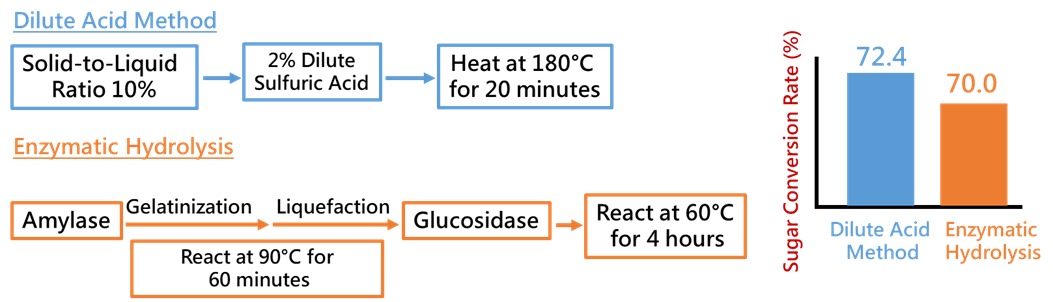
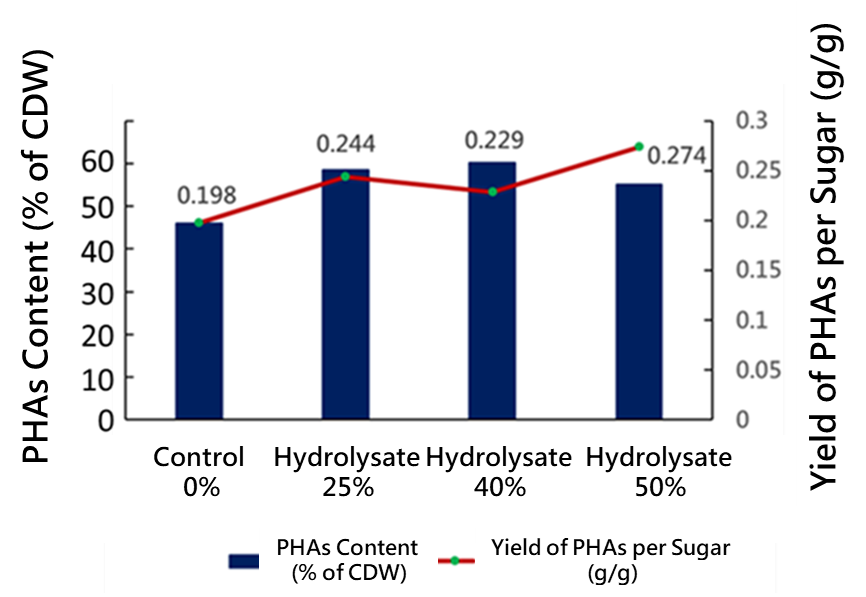
This technology integrates the dual characteristics of high-efficiency algal carbon sequestration and microbial fermentation transformation. By utilizing the hydrolysate derived from microalgal biomass as a nutrient source, polyhydroxyalkanoates (PHAs) are produced through a fermentation process, thereby achieving the objectives of resource valorization and carbon cycle extension. The established dilute acid and enzymatic hydrolysis pretreatment methods achieve a sugar conversion rate of up to 70%. While the efficiency of dilute acid treatment is slightly superior, enzymatic hydrolysis operates under milder conditions, allowing for the preservation of bioactive components within the algae. Notably, the developed algae-based PHA fermentation process relies solely on algal hydrolysate without the supplementation of inorganic salts, nitrogen sources, or trace elements, significantly reducing production costs and operational complexity. Experimental results using dilute acid hydrolysate demonstrate a maximum carbon source conversion rate of 0.27g PHAs/g glucose, with PHAs accounting for 55% of the total cell dry weight (CDW). The outcomes of this project can assist the algae cultivation industry in resource application and high-value product development, enhancing economic value and technical competitiveness while creating diverse industrial value chains and substantial economic benefits


Pre-treatment procedures for microalgae using acidification and enzymatic hydrolysis methods


PHAs fermentation using micoralgal hydrolysate as a carbon source

【Future prospects】
To support the development of net-zero technologies and the utilization of biological carbon sequestration resources, the intellectual property strategy for this technology will focus on "micoralgae-based PHA manufacturing technology." We plan to file for process and application patents specifically targeting key stages, including pretreatment and the hydrolytic conversion into fermentation carbon sources. By leveraging an integrated intellectual property portfolio, the research outcomes are expected to be transferred into practical industrial settings, promoting the use of microalgal-based feedstocks in fermentation processes and microalgae-based PHAs material applications. This initiative will facilitate technology translation and expand the industrial technology chain for low-carbon micoralgae-based materials.

【Contact information】
Name: Chung-Mao Ou
Tel: 886-3-4711400 Ext. 5061
E-mail:ouchungmao@nari.org.tw