:::

Defining the Emergency Planning Zones of Nuclear Power Plants through a Systematic Evaluation Approach


Published:2025-12-03  11:02

【Technical Introduction】
Based on the principle of prevention over response, the Nuclear Safety Commission (NSC) established Emergency Planning Zones (EPZs) to plan and prepare for disaster response, ensuring public safety and health. Concurrently, the NSC enacted the Nuclear Emergency Response Act, mandating Taiwan Power Company (TPC) to periodically review and revise the current EPZs. The National Atomic Research Institute (NARI) integrated the current nuclear energy safety and radiation protection analysis technology to develop a systematic evaluation approach for EPZs.
NARI developed an innovative systematic analysis technology that includes the calculations for inventories in reactor cores and spent fuel pools, severe accident analysis, design basis accident analysis and nuclear accident dose assessments. The system integrates upstream and downstream analytical tools (e.g., ORIGIN, MAAP, RADTRAD, and WinMACCS), as illustrated in Figure 1. This integrated technology combines the strengths of various analytical tools and ensures that each stage of the analysis is comprehensively considered and accurately calculated. The integrated system also provides an intuitive graphical interface, enabling faster data interpretation and assisting the decision makers make accurate judgement. This technology is critical for establishing EPZs and ensuring public safety.


Figure 1. Systematic analysis process and tool integration technology for EPZs

【Project Planning/Technical Applications】
The previous analytical technology for EPZs in Taiwan are based on the nuclear power plants (NPPs) during the full power operation. However, due to insufficient space in the spent fuel pools associated with Chin-shan and Kuo-sheng NPPs, some spent fuel remains temporarily stored in the reactors during the early stages of decommissioning. This is a unique situation internationally. The systematic analysis technology developed by NARI is suitable for NPPs during operation state and early stages of decommissioning. This achievement not only highlights the NARI's leading position in EPZ analytical technology in Taiwan but also completes the EPZs framework to ensure public health and property safety.
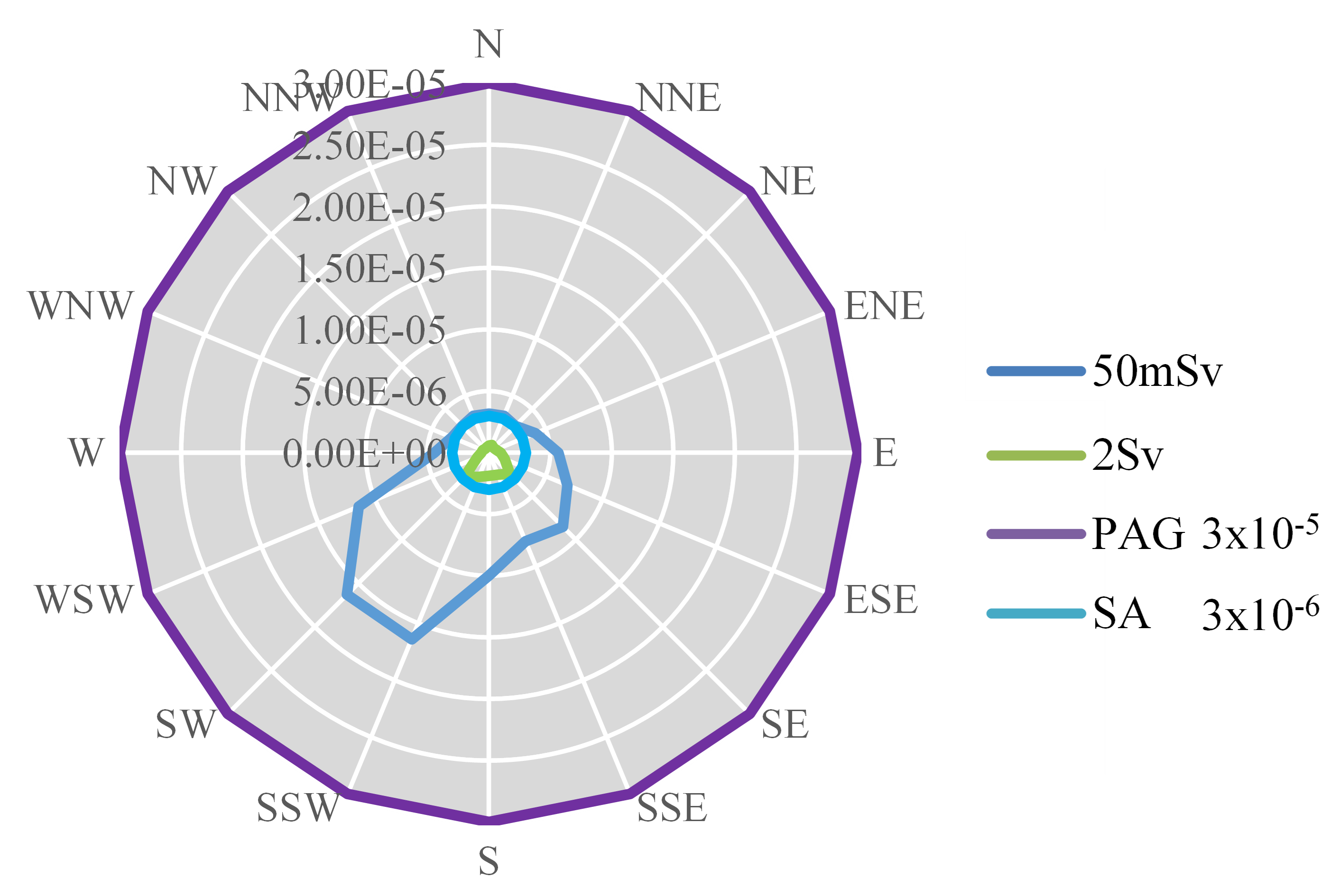
In accordance with the Nuclear Emergency Response Act, TPC is required to regularly review and revise the existing EPZs. The EPZ is defined as a circular area with a radius from the midpoint between the two reactor units. The assessment results indicate that the EPZs for the Chin-shan, Kuo-sheng, and Maanshan NPPs were within a 2.5 km radius in 2022, as shown in Figure 2. However, due to current administrative considerations by the NSC, the official EPZ remains set at an 8.0 km radius for all NPPs. Nevertheless, this technology provides a clear and quantifiable scientific basis for potentially reducing the EPZ. If future policies allow for such adjustments, the land surrounding NPPs could be revitalized and better utilized, aligning with national regulatory best practices and maximizing public interest.


Figure 2. Annual probability of exceeding 50 mSv and 2 mSv in 2.5 km radius (using the Maanshan NPP as an example)

【Future Development】
 To address the evolving trends in nuclear energy development and disaster prevention needs, this technology will continue to enhance the research models and promote broader applications. In terms of model accuracy, an Artificial Intelligence (AI)-assisted decision-making mechanism will be incorporated, and real-time coupling with meteorological data will be implemented to improve the timeliness and reliability of accident simulations and dose predictions. In addition, this technology will be extended to next-generation nuclear energy systems, such as Small Modular Reactors (SMRs), by developing EPZ analysis techniques tailored for SMRs and formulating corresponding zoning policies. Whether applied to conventional nuclear reactors or emerging SMR technologies, this technology will continue to play a critical role in supporting national sustainable development and enhancing global competitiveness.
 
【Contact Information】
Name:Cheng-Lun Yu
Tel:03-4711400  Ext. 6112
E-mail:fishcan@nari.org.tw